UN ECE R151 & R158: How New EU Blind-Spot Rules Are Reshaping MDVR Specs
The EU's latest blind-spot regulations mandate AI detection and camera-based visibility systems for heavy-duty trucks. Here's what fleet operators and MDVR vendors need to know.
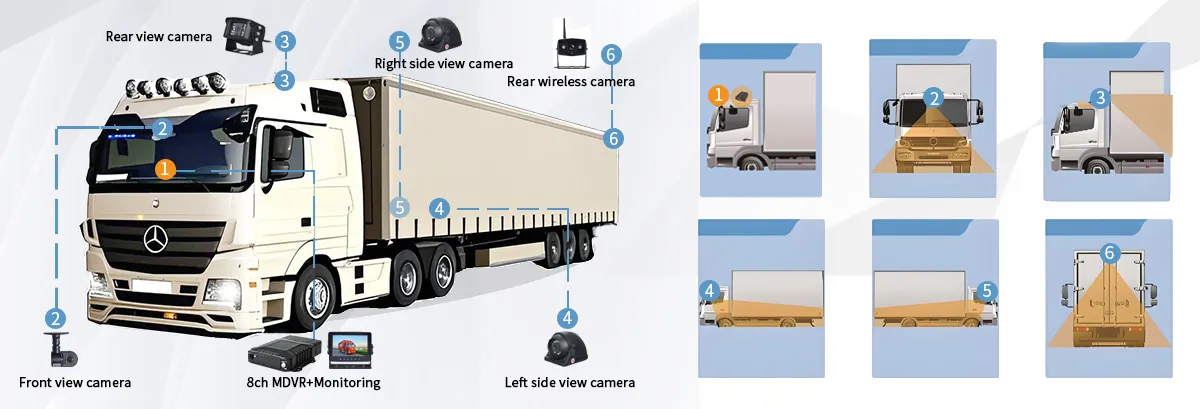
Two new UN ECE regulations entering force across the EU are fundamentally changing how MDVR and vehicle camera systems are specified for heavy-duty vehicles — and the ripple effects are being felt by fleets and vendors worldwide.
What the Rules Require
**R151 (Blind Spot Information System)** mandates AI-based pedestrian and cyclist detection on the passenger side of trucks over 12 tonnes, with audible and visual alerts to the driver. **R158 (Rear-View Camera Systems)** updates the requirements for camera-based mirror replacement, setting minimum field-of-view, latency and image quality standards that directly raise the bar on MDVR camera specs.
Why It Matters Beyond Europe
Because most global MDVR vendors design for a single worldwide platform, the R151/R158 requirements are effectively becoming the de facto baseline. Fleets in the Middle East, Southeast Asia and Latin America are already seeing next-gen MDVRs with AI BSD built in — even where local regulation hasn't yet caught up.
What Fleet Buyers Should Spec Now
If you're running or specifying trucks in the EU, compliance is non-negotiable by mid-2027. Even outside Europe, we recommend treating AI BSD (Blind Spot Detection) and camera-based mirror replacement as baseline requirements on any new MDVR tender — the cost delta is small, and the safety case is proven.