Built In at the Factory: How Smart Police Cars Are Rewriting In-Vehicle Installation
The first batch of police vehicles designed, built and delivered with command-grade in-vehicle systems embedded from the factory is now in service in Beijing. Combined with 2026 retrofit and OEM-fit rules, a harder question emerges: how long is the aftermarket box window?
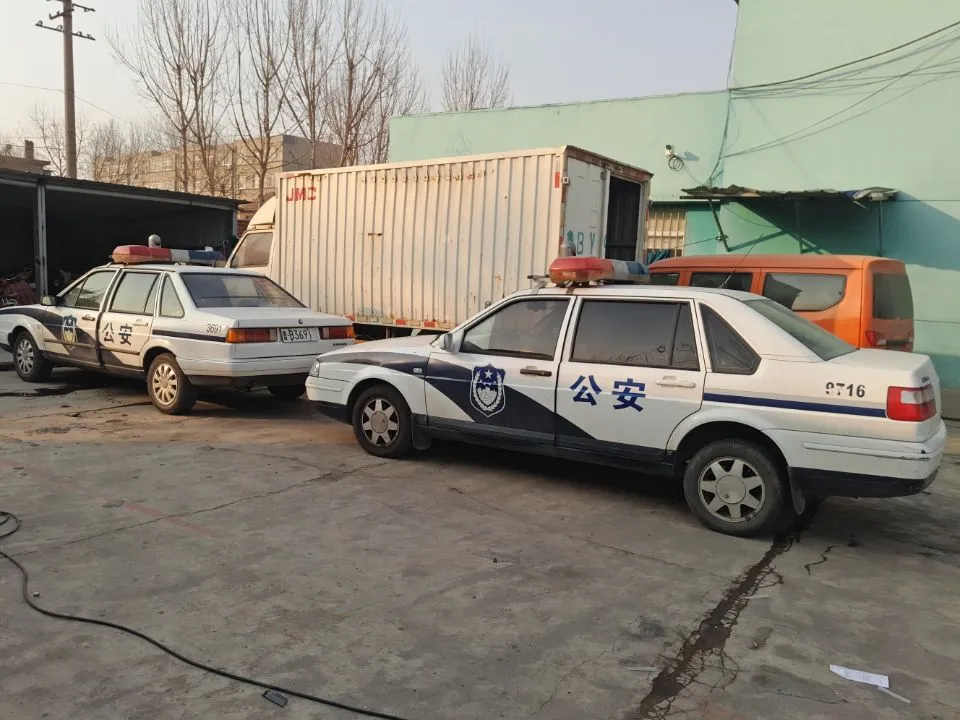
Among the most consequential exhibits at Security China 2026 were not the demo robots but vehicles already in service. In October, the first batch of smart police cars designed and produced as integrated units — with public-security in-vehicle systems embedded at the factory — entered operation in parts of Beijing. Read alongside 2026 retrofit mandates and OEM-fit regulation, they change the installation logic for the entire in-vehicle video market.
What Was on the Floor
The vehicle system is deeply integrated with the police command and dispatch centre. It can perform the full range of 110 functions including dispatch and citizen services inside the car, establish a small-area tactical command centre on the spot, and assemble a minimum operational unit with one command. Smart glasses and earpieces worn by officers connect to the vehicle system over the mobile police network so that different roles handling the same incident share information, images and audio.
Also deployed alongside it is an unmanned police vehicle nicknamed Xiaotian, which supports Chinese, English and Russian voice interaction, patrols autonomously and adjusts its route dynamically to crowd conditions, streaming camera footage back to the command hall in real time. A separate pair of police smart glasses carries a 12-megapixel camera and on-device compute for local person and vehicle recognition, used for allow/deny list checks at large events and for roadside traffic inspections.
The official innovation shortlist corroborates the direction: a HarmonyOS-based smart police vehicle solution appeared under smart policing, and an unmanned automatic police patrol vehicle under video surveillance.
The Policy Floor
The joint action plan on safety supervision capability for tourist coaches, chartered buses and hazardous-goods vehicles (Jiaoyunfa 2026 No. 2, issued 5 January 2026, running through December) requires all in-service vehicles in these categories to be fitted with intelligent video monitoring and alarm devices by the end of June 2026. New vehicles entering the market must have such devices plus automatic emergency braking. Panoramic surround-view systems are encouraged. The plan also upgrades the networked monitoring system for segmented speed alerts, direct messaging to on-board terminals, cross-region data retrieval and consolidated use of intelligent video alarm data, and penalises enterprises whose alert handling rate falls below 90 percent.
A municipal transport authority reply from April 2026 reports that 198 vehicles procured that year — 93.2 percent of total new purchases — came with factory-fitted active safety equipment. Citing the mandatory national standard GB 21668-2025 on technical conditions for dangerous-goods transport vehicles, it states that from July 2026 all newly entering hazardous-goods vehicles must have factory-fitted AEBS, satellite positioning and intelligent video monitoring, plus right-turn blind-spot monitoring or 360-degree surround view.
Retrofit and Built-In Are Two Different Businesses
Put those two groups of facts side by side and a dividing line appears. On one side is a certain, policy-driven wave: by June 2026, every in-service vehicle in the regulated categories was to be retrofitted with intelligent video alarm devices — the last large-scale mandatory aftermarket installation cycle. On the other side, the same document points the other way: new vehicles should already have the capability, reinforced by the July factory-fit requirement and a 93.2 percent OEM-fit procurement share in one city.
The phrase used of the police cars — designed as one, built as one, embedded at the factory — describes not a device installed in a vehicle but an on-board compute and communications node defined during vehicle design. Recording becomes one function among many; the subject of the product is now a mobile command terminal.
Three consequences follow. First, the buyer moves upstream: procurement shifts from fleets and integrators to vehicle makers and cockpit solution providers, with different certification cycles, automotive-grade requirements, supply qualifications and software interfaces. Second, the product definition moves from recording to coordination, judged by whether it can join a command system, work with wearables and unmanned equipment, and push critical information out over a weak network. Third, retrofit does not disappear but changes character: the installed base is large, old and slow to renew, so new value comes from giving already-installed devices new capabilities rather than adding another box.
What to Add to a 2027 Specification
• System identity: from a standalone recording terminal for after-the-fact evidence to an in-vehicle edge node that declares its interface protocol and can join command and dispatch platforms.
• Multi-device coordination: cameras no longer terminate only at the local host; require event-level coordination with wearables, unmanned equipment and roadside units.
• Network assumptions: stop assuming permanent 4G. State local first-judgement, buffering, resumable upload and degraded behaviour under weak or absent connectivity.
• Compliance interfaces: ministry standards such as JT/T 794, 808, 1076 and 1078 remain necessary but no longer sufficient; add data classification, cross-border handling and tamper evidence.
• Lifecycle: replace one-off hardware delivery with OTA model and algorithm updates that are grey-released, rollback-capable and version-traceable.
Our Judgment
The June 2026 retrofit deadline is a high-water finish for the aftermarket, not the start of a new growth curve. The defensible move is to redefine the product as an in-vehicle intelligent node that vehicle makers and command systems can call, while holding open the upgrade channel to the installed base. Misreading a one-year policy windfall as a long-term trend is the easiest strategic mistake to make after this show.
Sources: China Industry News and CCTV/industry coverage of the smart police vehicles, the official 2026 innovation and solution shortlist, Jiaoyunfa 2026 No. 2 and local implementation documents, and the Dongying municipal transport authority reply of 13 April 2026. Note that widely circulated details about 0.0002-lux black-light full-colour police beacons and an OpenHarmony-based police platform come from the May 2026 Xi'an security exhibition, not this Beijing show, and are excluded here. No independent product launch by an MDVR whole-unit vendor appeared in the public reporting on this edition, so this article makes no claim about their presence or market shares.