Cold Chain Logistics Surveillance: A Procurement and Deployment Guide
Refrigerated fleets face unique monitoring challenges — temperature, door events, and chain-of-custody evidence. Here's how to spec it right.
Cold chain logistics — pharmaceuticals, frozen food, perishables — has surveillance requirements that go well beyond standard fleet MDVR. This guide walks procurement and deployment for refrigerated fleets.
The Monitoring Brief
Cold chain surveillance is really two systems: a video MDVR for security and liability, and a temperature/door monitoring system for product integrity. The best deployments integrate both — temperature excursions trigger video clips that show who opened the door and when.
Camera Placement for Reefers
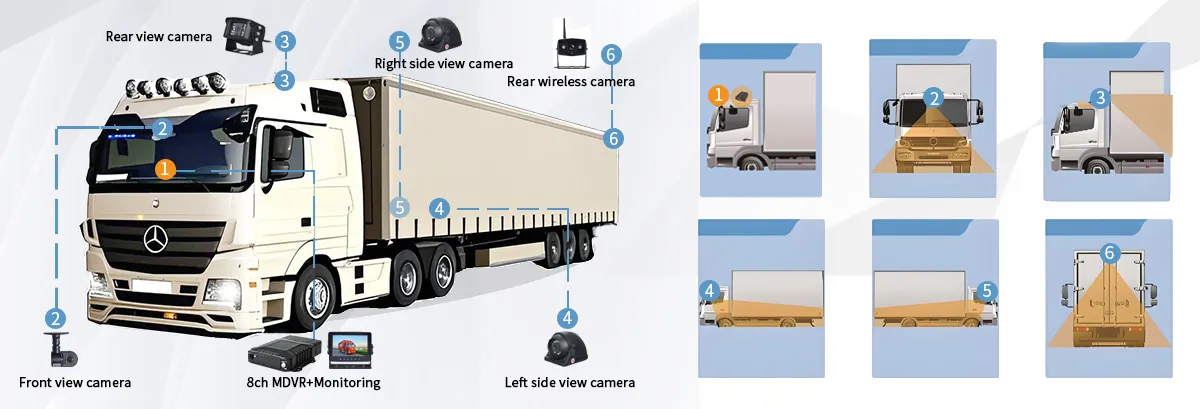
Spec cameras at the rear cargo doors (interior and exterior), the refrigeration unit control panel, and the curb-side approach. The interior cargo camera is essential for chain-of-custody disputes — the most common cold chain litigation.
Integration with Telematics
Reefer telematics — Carrier or Thermo King data feeds — should flow into the same platform as video. Disputes over whether a temperature excursion was a reefer failure or a door event are resolved instantly when video and temperature logs are time-synced.
Chain-of-Custody Evidence
For pharmaceutical cold chain, chain-of-custody evidence is non-negotiable. Ensure your MDVR exports clips with hash-verified metadata and GPS coordinates — generic MP4 exports won't satisfy pharma auditors.
Power Management
Reefer units run when the engine is off, and surveillance should too. Spec MDVRs with dual-power inputs and deep-cycle battery protection — last-mile delivery trucks with frequent stops are the highest-risk scenario for battery drain.
Deployment Checklist
Run a pilot on 5–10 vehicles across mixed reefer types before scaling. Validate temperature integration, door-event triggers, and clip export workflow with your quality team — not just your fleet manager.